

Earth Fine
On circular materials and processes
Merel Lambrechts - Frauke Jongbloet - Kobe Rens-Sien Van Dijck - Yana Verhoeven - Merel Lambrechts - Frauke Jongbloet - Kobe Rens-Sien Van Dijck - Yana Verhoeven - Merel Lambrechts - Frauke Jongbloet - Kobe Rens-Sien Van Dijck - Yana Verhoeven - Merel Lambrechts - Frauke Jongbloet - Kobe Rens-Sien Van Dijck - Yana Verhoeven -

Process
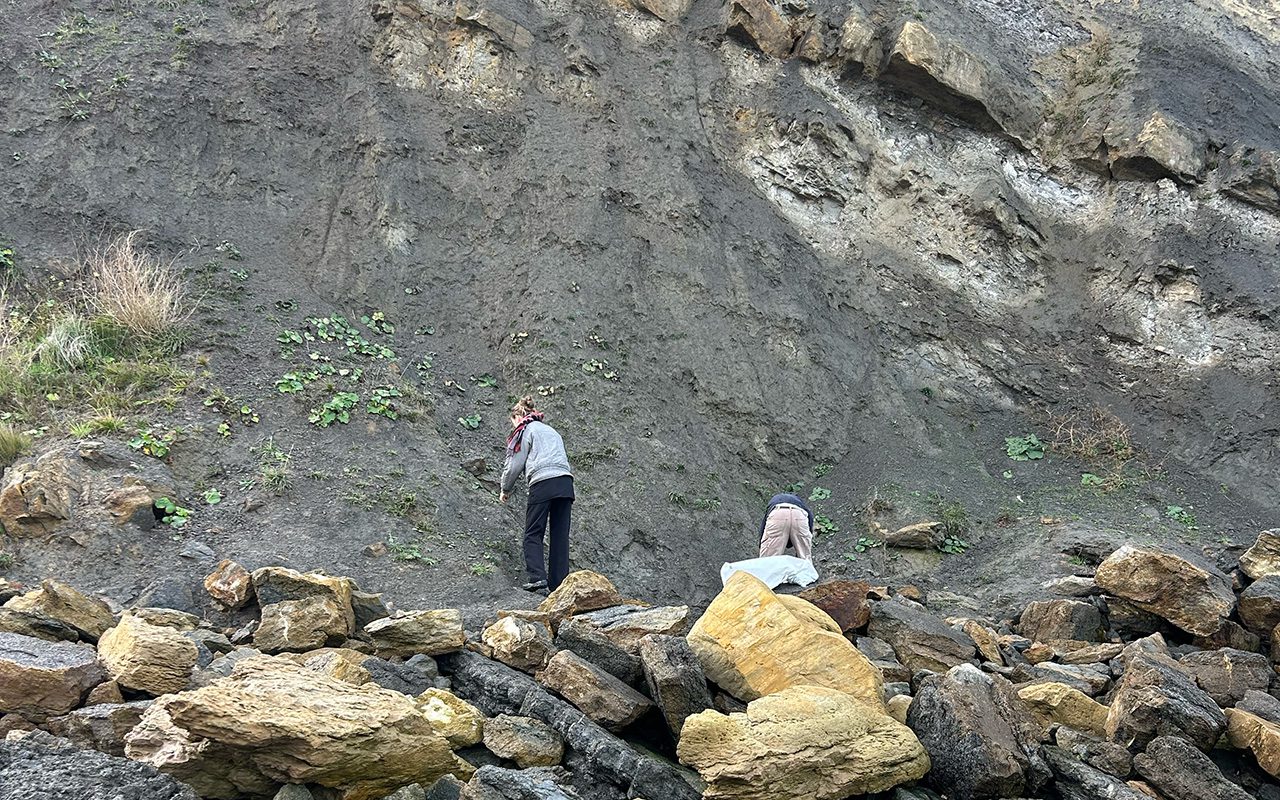
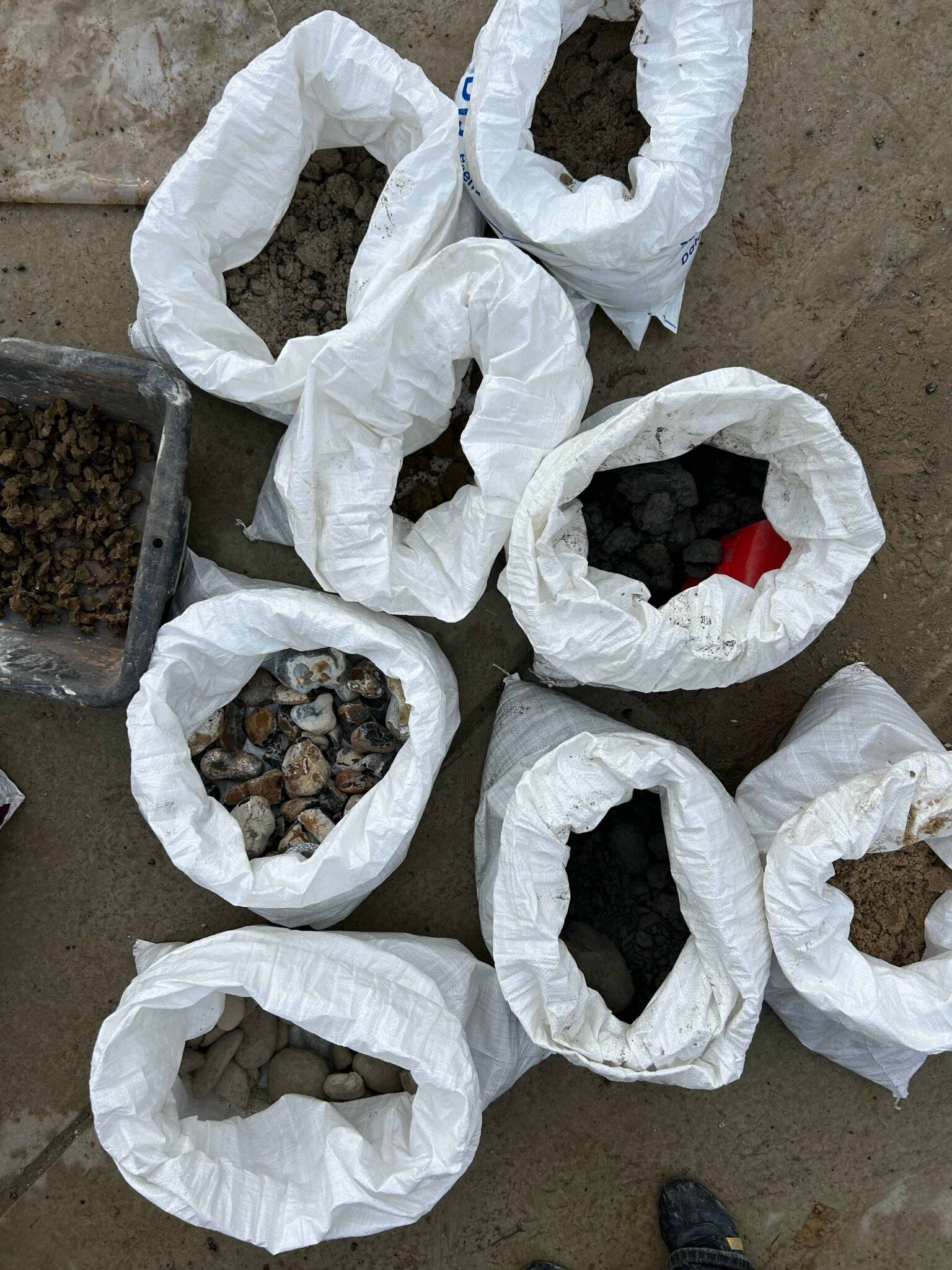

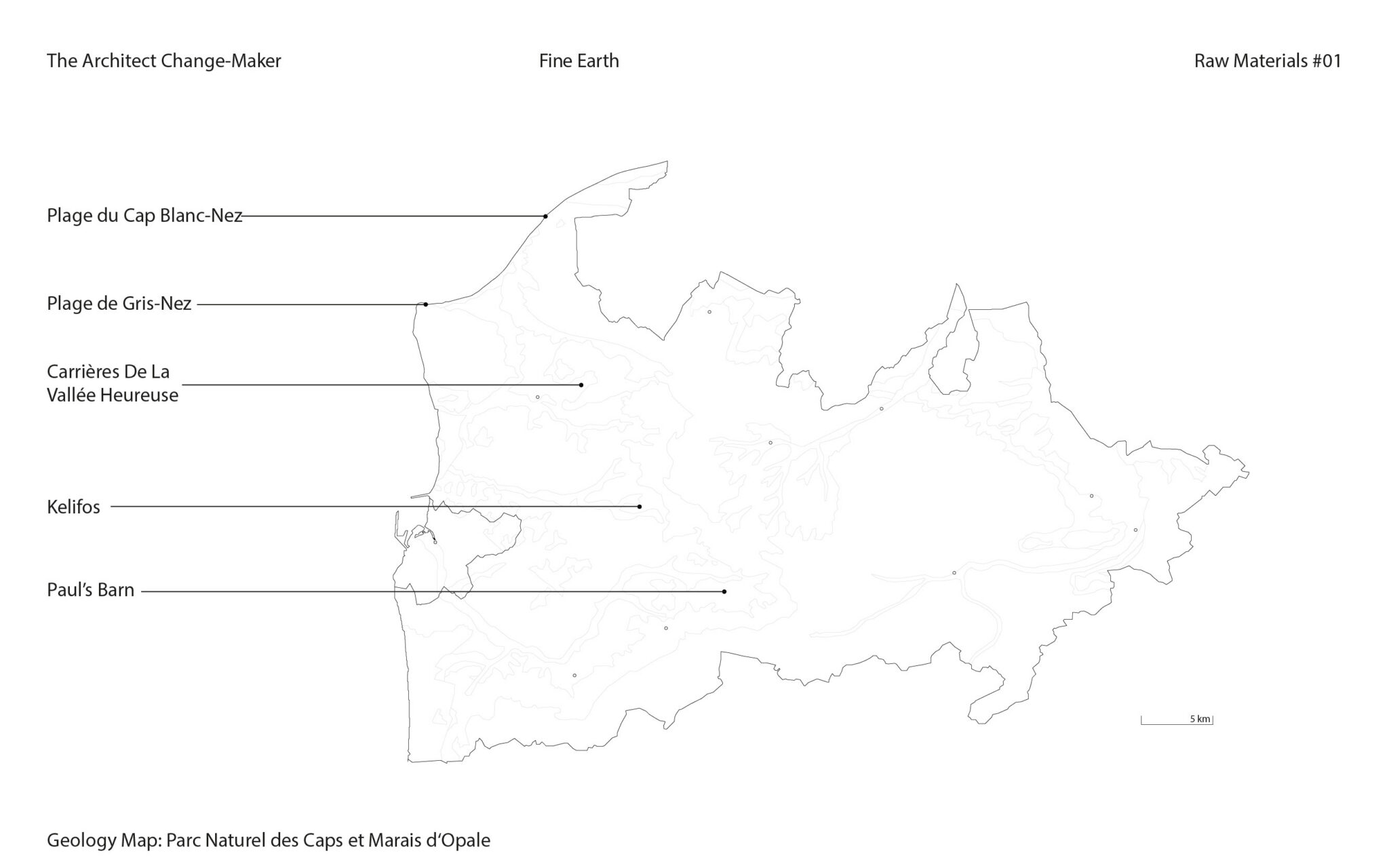
Samples
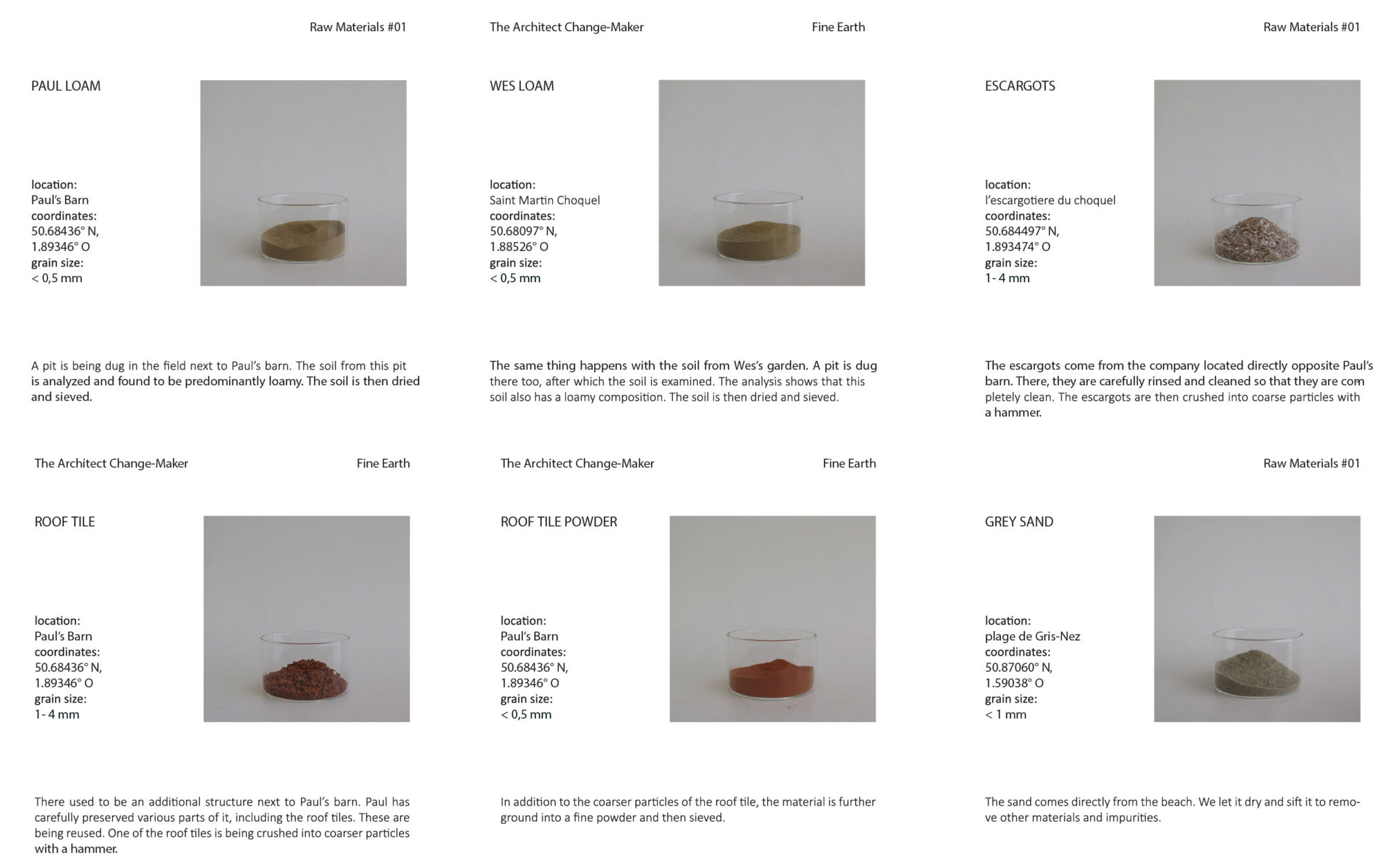

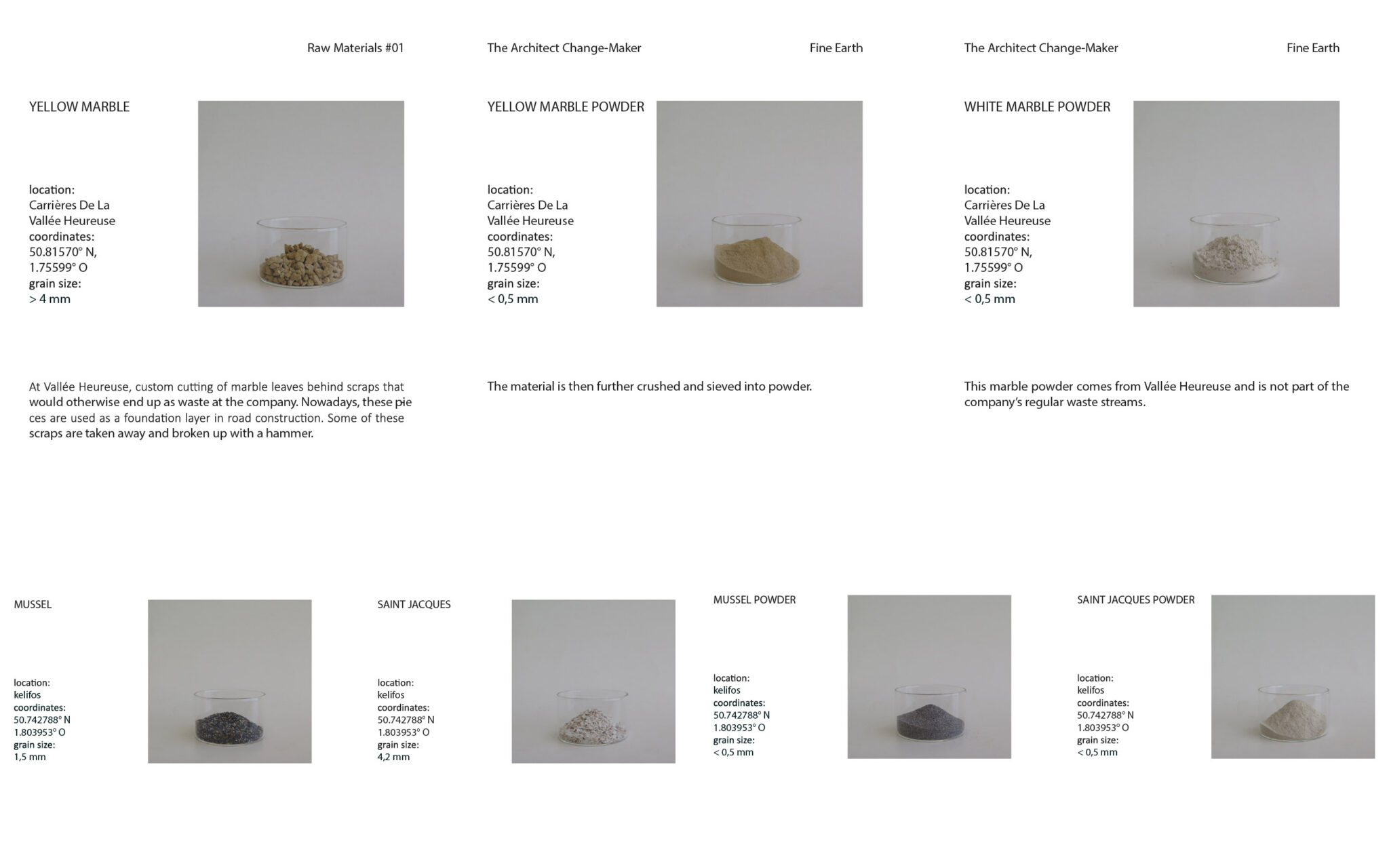
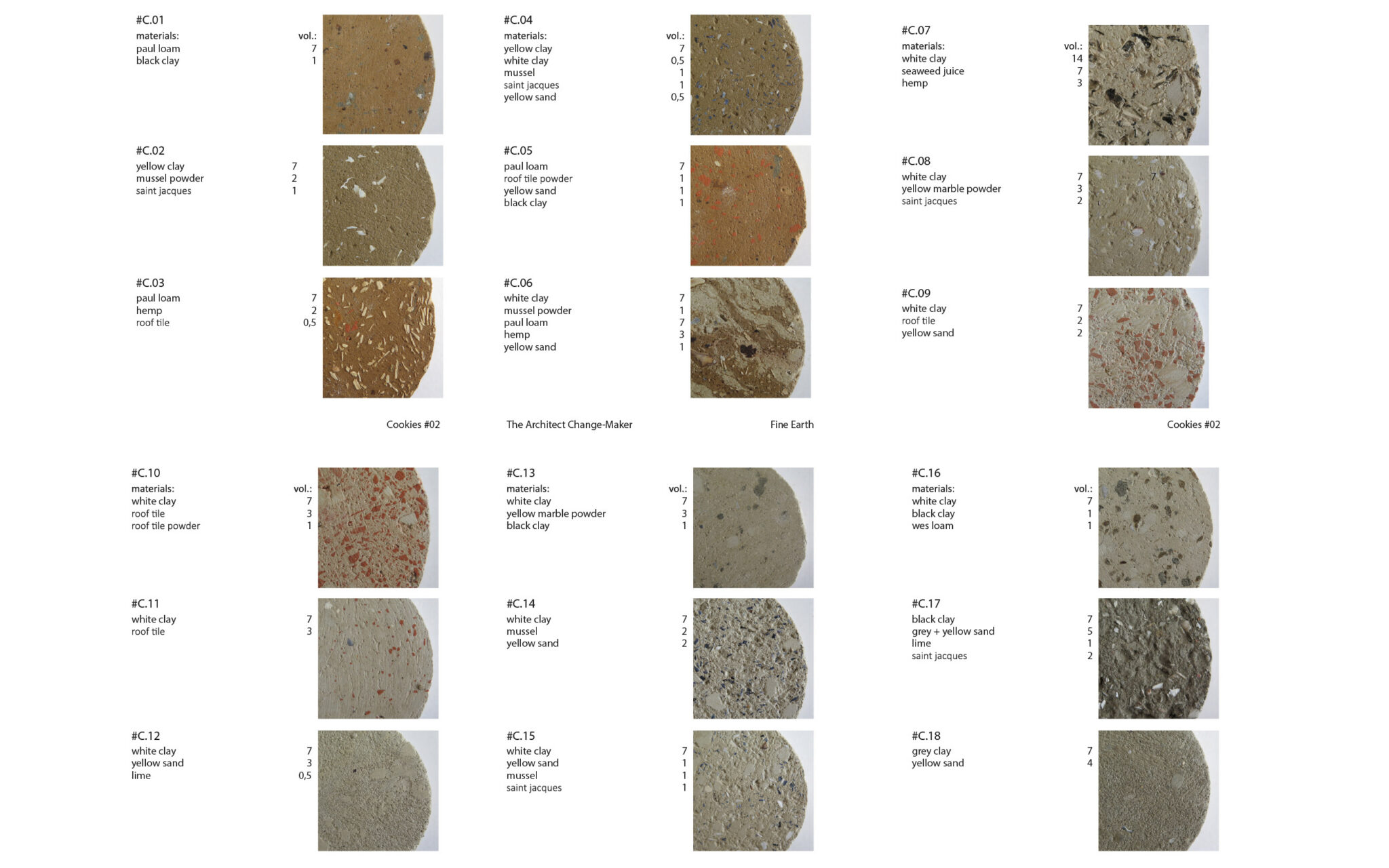

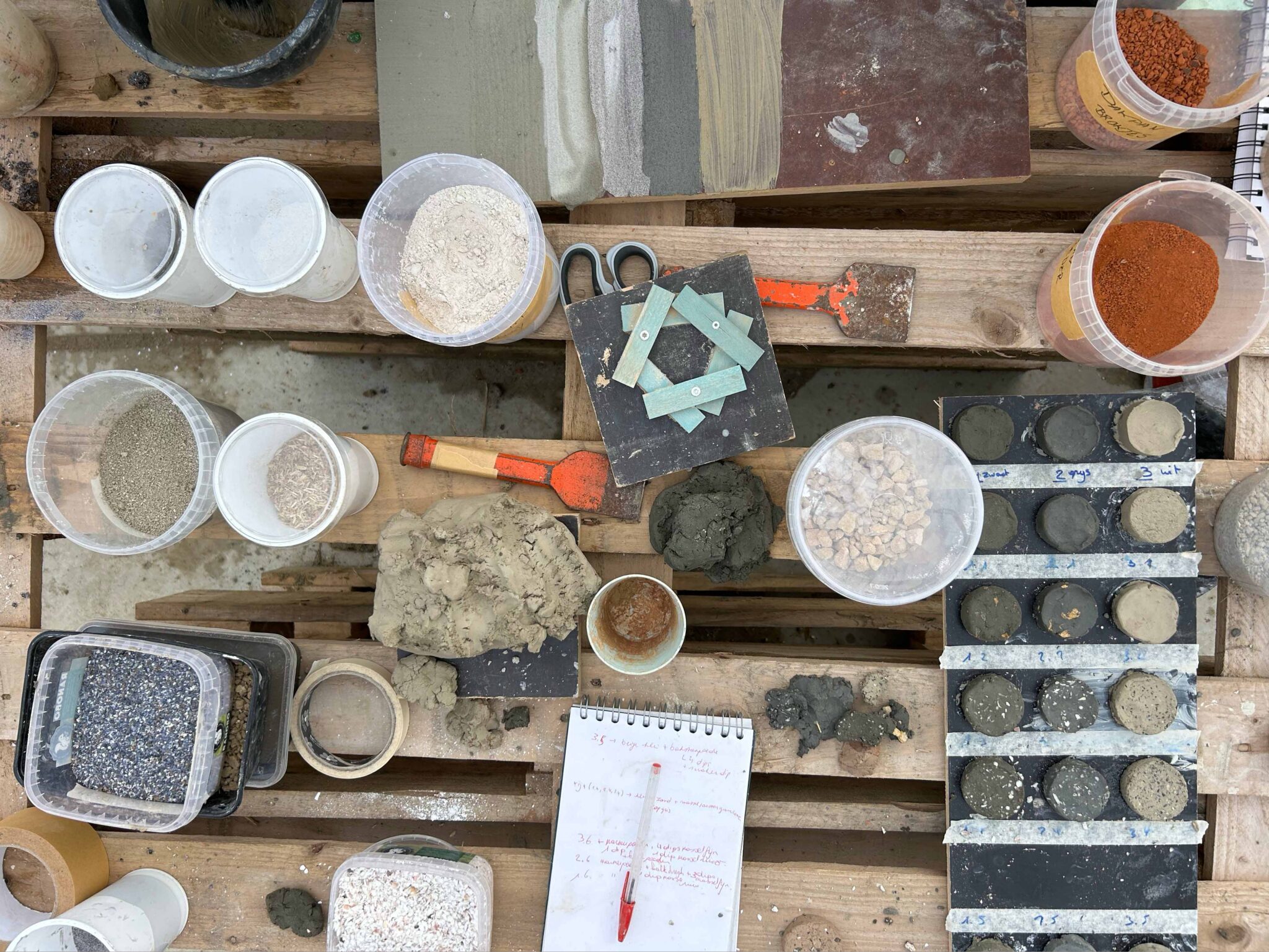
We began by producing terrazzo-style clay tiles, initially using roof tile fragments and shells for contrast, then refining the effect with clay fragments for a subtler finish. After drying, the tiles were sanded to reveal the terrazzo texture.
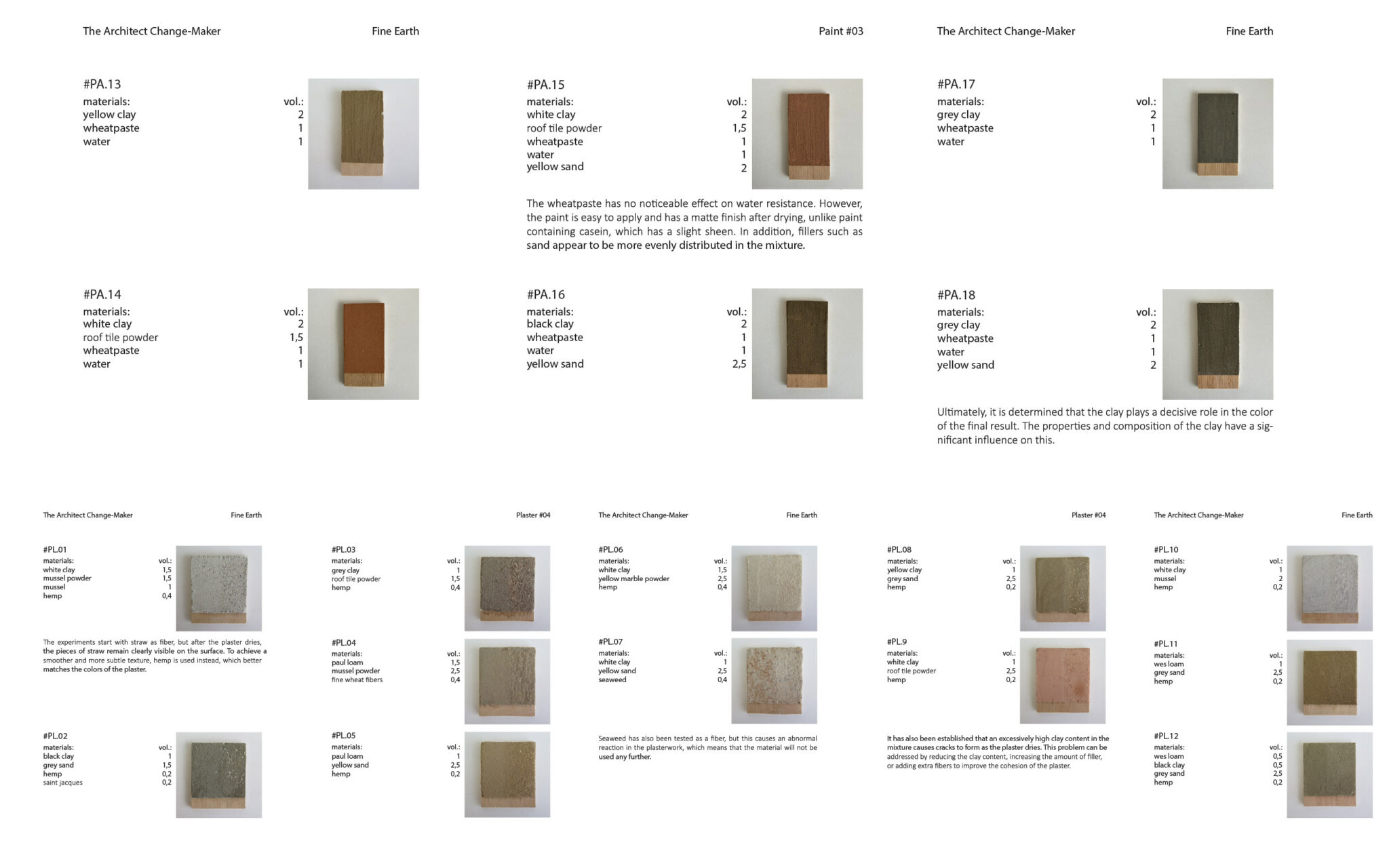
We also tested clay-based paints, experimenting with pigments and additives such as sand and casein to modify texture and water resistance. However, issues such as cracking and loss of material quality led us to discontinue this exploration.
For loam plaster, we tested various ratios of clay, filler, and fibers to achieve optimal cohesion and limit cracking. Alternative fillers (mussel, marble, brick powder) and fibers (seaweed flakes) were also explored, some producing unexpected reactions.
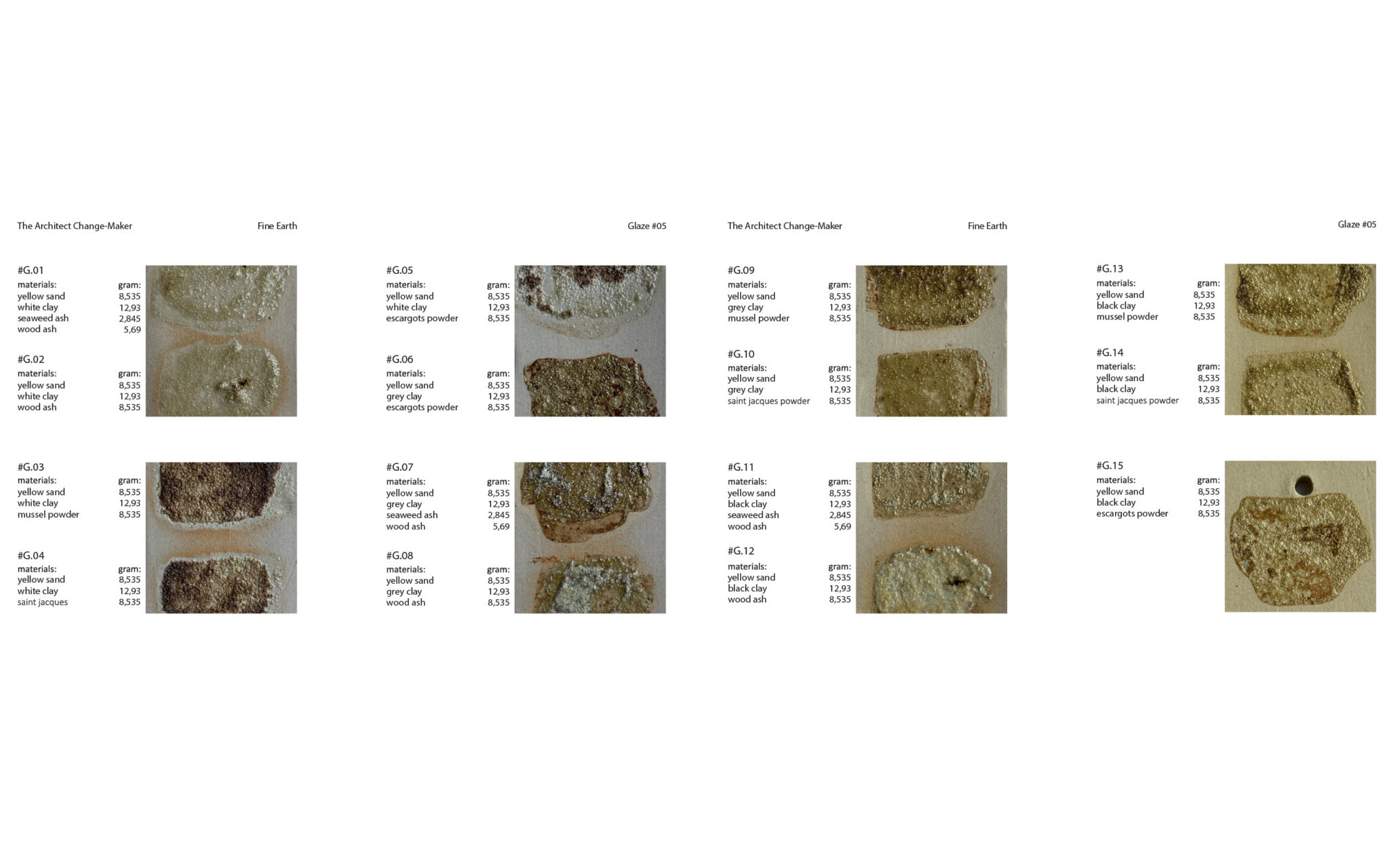
Finally, we experimented with glazes composed of silica, fluxes, and clay stabilizers. While intended for our own clay tiles, firing issues caused them to break or melt, so the glazes were ultimately tested on commercial clay instead.